Playable Ad Production Service for Faster Tests
Choose a playable ad production service built for faster testing, clearer creative learnings, and launch-ready interactive ads for paid social campaigns.
By Scrolling Studio · · 6 min read
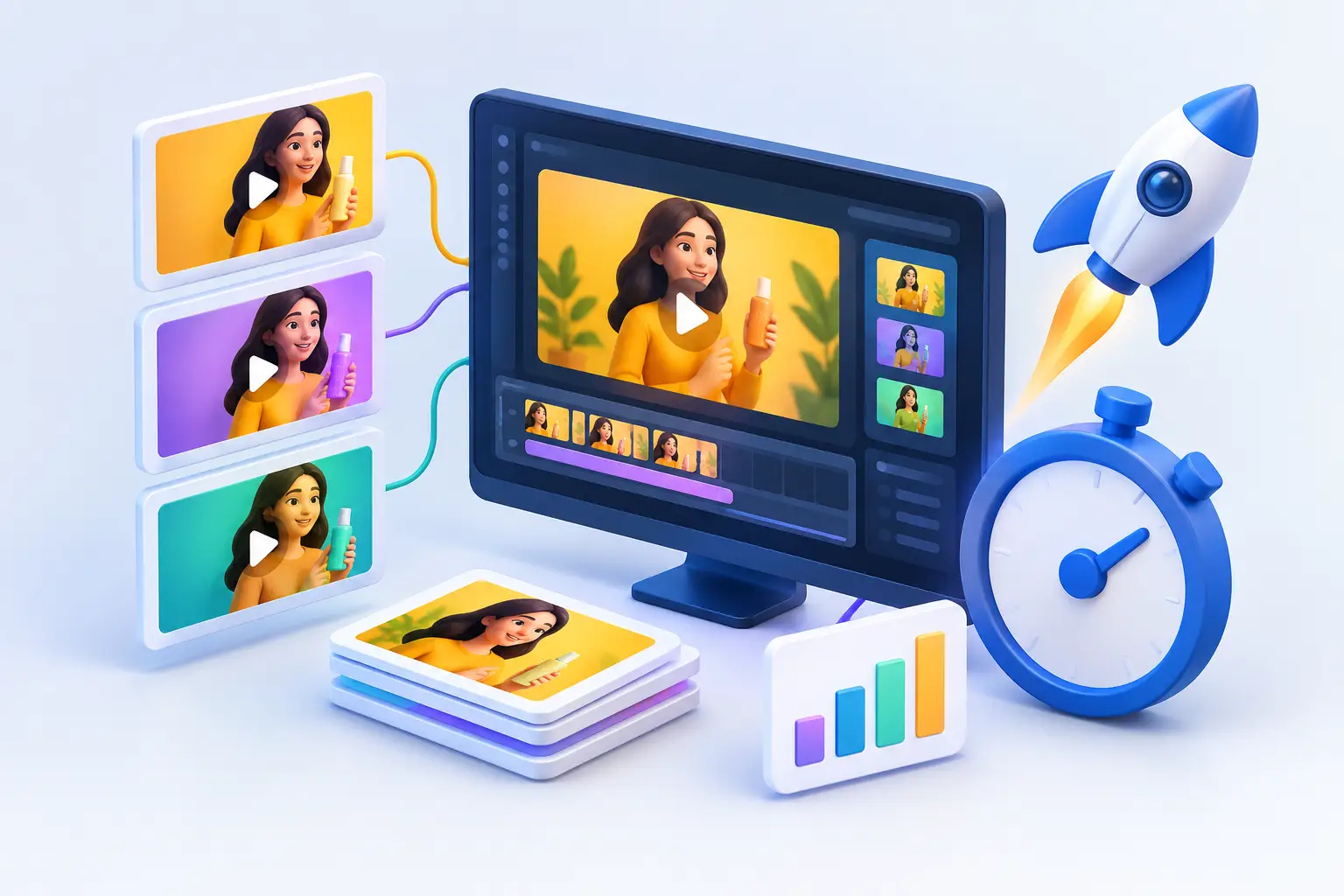
A playable ad can earn attention that a static image never gets the chance to buy. But the format only works when the interaction supports the campaign message, the first seconds create momentum, and the final CTA moves users into the next step. A playable ad production service should handle that full chain - not just build a mini-game and hand over a file.
For growth teams running paid social, playable ads are a testing format. They can turn a product benefit into an action, give prospects a low-friction taste of an app or experience, and create a more memorable route to install, trial, or purchase. The operational challenge is producing enough strategically different concepts to learn what actually changes performance without adding another slow vendor workflow.
What a playable ad needs to accomplish
A playable is not automatically effective because it is interactive. Many underperform because the experience takes too long to explain, feels disconnected from the product, or gives users a satisfying interaction with no clear reason to continue.
The strongest playable ads make the core value proposition tangible fast. A puzzle game may let users complete the satisfying action before asking for the install. A finance app might simulate a spending decision and show the reward of a smarter choice. An ecommerce brand can use a quick product selector, match quiz, or customization mechanic to bring shoppers closer to the product catalog.
The goal depends on the campaign. For an app install campaign, the playable should reduce uncertainty about the app experience and set up a qualified install. For ecommerce, the mechanic may be better used to build product curiosity, collect an interaction signal, or move users toward a product page. The format should serve the conversion event, not become a novelty project.
The five-second test still applies
Interactive ads have more room than a standard video, but they do not get more patience. The opening frame must communicate a recognizable premise immediately. Users need to understand what to tap, why it is worth tapping, and what outcome they can expect.
This is where performance creative strategy matters. The hook is not only the first line of a script. In a playable, it includes the visual setup, instruction, interaction prompt, reward, and transition into the CTA. If any piece is vague, drop-off happens before the ad has produced useful intent.
What to expect from a playable ad production service
A useful partner starts with campaign intelligence, not development tickets. The production team should understand the product, customer motivation, existing winning hooks, objections, platform, conversion goal, and brand boundaries before concepting the interaction.
That context informs the creative brief. A good brief defines the audience, the promise, the game or interaction loop, visual direction, user flow, CTA, required claims, and success metric. It also identifies what will vary across executions. Without this step, teams often receive several ads that look different but test the same underlying idea.
From there, the service should turn approved concepts into launch-ready assets. That includes interface design, motion, copy, sound if needed, QA, platform specifications, and delivery in the files your media team needs. If the playable depends on multiple vendors for strategy, design, development, and revisions, the speed advantage disappears quickly.
A complete production scope typically covers four practical outputs:
- Strategic concepts tied to distinct hooks or product angles
- Interactive creative built around a clear user flow and CTA
- Meaningful variations that isolate different messages, mechanics, or visual treatments
- Final, QA-tested files with ownership terms defined before launch
The distinction between variation and duplication matters. Changing a button color, background image, or closing line can be useful for optimization later. It is not enough for early-stage learning. Early tests should give the media team different hypotheses to evaluate: competitive challenge versus product demo, instant reward versus aspirational transformation, or utility-first messaging versus entertainment-first messaging.
How to brief a playable without slowing the work down
A rough campaign idea is enough to start if the system can turn it into a focused brief. Your team should provide the inputs only your team owns: what you sell, who you need to reach, the event that matters, the offer or product priority, previous creative learnings, and non-negotiable brand or legal requirements.
Do not over-specify every screen before the creative strategy is set. That tends to lock teams into a mechanic before they have confirmed it is the best expression of the message. Instead, be specific about the business problem. For example: “We need more qualified free trials from people who think setup will be difficult.” That gives the creative team a real job to solve.
It also helps to share losing patterns. If polished product walkthroughs have repeatedly produced cheap clicks but weak conversion, say so. If customer-led challenge hooks have driven strong cost per trial, that should shape the concept direction. Paid creative becomes more efficient when production begins with evidence rather than preference.
Match the interaction to the platform and funnel stage
Not every campaign needs a complex playable. A simple tap-to-reveal, choice-driven flow, or quick match interaction may outperform a more elaborate mechanic because it makes the value proposition clear with less cognitive load.
Complexity has costs. More screens create more places for users to leave. More logic increases QA requirements. More custom development can slow iteration. A deeper experience may be justified when demonstrating the product itself is the conversion driver, especially for gaming or feature-rich apps. For many consumer brands, a concise interactive format is easier to test, faster to ship, and easier to refresh when performance fades.
Platform requirements matter too. The team building the ad should plan for load speed, screen sizes, click behavior, tracking needs, and the handoff requirements of the media channel. A creative that looks right in a preview but fails during delivery is not production-ready.
Build a testing plan before production begins
Playable creative should enter the account with a defined learning agenda. Decide what question each execution is meant to answer. That keeps the test from becoming a vague comparison of several unrelated ads.
One concept may test whether users respond to a competitive challenge. Another may test whether they prefer immediate product utility. A third may test an emotional before-and-after transformation. Each can use a different interaction mechanic, but the team should know which message variable it is trying to validate.
Give each execution enough budget and time to generate a directional read. Then assess the entire path, not only engagement. High interaction rate can be encouraging, but it does not outweigh weak installs, poor trial quality, low purchase rate, or declining ROAS. The right evaluation metric follows the campaign objective.
When an angle works, do not treat it as a finished asset. Use it as a production signal. Create the next round around the winning promise with new openings, reward structures, visuals, and CTA treatments. That is how creative testing becomes a repeatable pipeline instead of a series of one-off bets.
Why production speed changes the economics of creative testing
Creative fatigue does not wait for a quarterly planning cycle. By the time a traditional agency has scheduled discovery, presented concepts, sourced specialists, and completed multiple approval rounds, the original market signal may be gone.
A faster model gives performance teams more chances to respond. Scrolling Studio turns campaign inputs into production-ready briefs and finished ad concepts, including playable formats, without the usual retainer or fragmented creator process. The practical advantage is not just a shorter turnaround. It is the ability to test while the audience, offer, and insight are still relevant.
Speed should not mean skipping strategy or QA. It should mean removing avoidable handoffs: repeated brand onboarding, unclear ownership, unstructured feedback loops, and variations that fail to create a new learning. The best production process is disciplined enough to protect quality and lean enough to keep ads moving.
Choose for learning velocity, not just a polished demo
When evaluating a playable partner, ask how they turn a campaign goal into concepts, how quickly they can produce distinct executions, how revisions are managed, and what exactly you own at delivery. Ask how they test for functionality before launch. Ask whether they can keep producing fresh creative once the first concept identifies a promising angle.
A great-looking demo is not the finish line. Your media team needs an ad that loads correctly, gives users a reason to interact, and produces a clear next testing decision. Start with one business question, make the interaction earn its place, and build the next creative round from what the market tells you.